
25 July 2026


Library
THE USE OF ROBOTIC FIRE EXTINGUISHING SYSTEMS FOR THE PROTECTION OF BUILDING STRUCTURES

22 June 2026
This article examines the relevance and necessity of using robotic fire extinguishing systems at industrial facilities with increased risks of emergency situations – in the engine rooms of power plants and facilities of the fuel and energy complex. The sufficiency of the existing regulatory framework regarding the requirements for cooling metal building structures in case of fire by carriage shafts and other fire extinguishing means is assessed, and the time of their heating to critical temperatures at which load‑bearing capacity is lost is calculated.
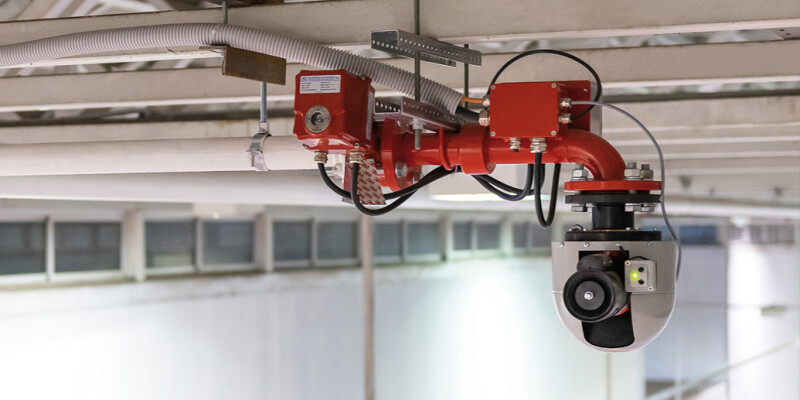
Robotic fire suppression systems based on mini-firefighting robots are effective solutions for protecting public buildings and structures.
19 May 2026
This article discusses the FR-Mini robotic fire suppression system (RFSS), developed to protect public buildings and structures, often unique in design but challenging to ensure fire safety. The system's key advantages are described: early automatic fire detection, targeted adaptive extinguishing agent delivery, minimized water damage, and a compact design that allows for integration without disrupting architectural design. The article emphasizes the system's full compliance with modern fire safety standards (SP 485, GOST) and the availability of comprehensive engineering support, including specialized design software. It also addresses issues of easy installation, fire testing, and remote monitoring, which ensure the reliability and cost-effectiveness of the proposed technical solutions.
Robotic fire suppression systems: Design standards and regulations

02 October 2025
Robotic fire suppression systems are intelligent automated systems designed to protect unique and technically complex facilities where traditional automated fire suppression systems no longer provide the required level of safety. This article examines regulatory requirements (Federal Law 123, GOST R 53326-2009, SP 485.1311500.2020, VNPB 39-20), the operating principle and composition of the robotic fire suppression systems, their design algorithm, as well as software and service solutions from the EFER Engineering Centre, enabling designers and operators to implement effective, adaptive, and field-proven next-generation fire suppression systems.


FR Library
To the library



Media section
View all
